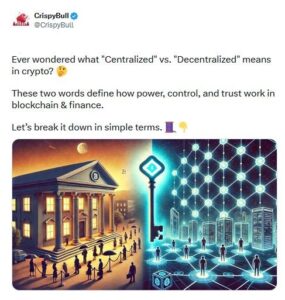
In a world where traditional financial systems often feel slow, exclusionary, or overly centralized, blockchain personal finance tools are quietly rewriting the rules. From decentralized loans to fractional asset ownership, blockchain is creating a new class of financial products. These tools give individuals more control over their money. But is this evolution practical or just another buzzword-laden trend?
Let’s break down how decentralized finance and blockchain-based innovations are beginning to influence everyday financial decisions in the UK and beyond.
What is Decentralized Finance – and Why Should You Care?
Decentralized finance (DeFi) refers to a system of financial services built on blockchain networks. Unlike traditional models, it operates without banks or brokers. These services rely on smart contracts, self-executing programs that enforce rules automatically.
Whether it’s earning interest, trading assets, or borrowing funds, DeFi platforms provide users with new access points. In the past, these services required paperwork, credit checks, and long wait times at a bank.
For the average consumer, DeFi offers something increasingly rare: financial independence on your own terms.
Crypto Loans: Borrowing Without Banks
One of the most tangible applications of decentralized finance is crypto loans. These don’t rely on traditional credit scores. Instead, users lock up digital assets, like Bitcoin or Ethereum, as collateral. In return, they receive stablecoins or fiat equivalents.
Popular platforms like Aave and Compound allow borrowers to:
- Receive funds almost instantly
- Avoid bank approvals or paperwork
- Retain ownership of their crypto (unless liquidated due to price drops)
However, risks exist. Collateral values can drop suddenly. If prices fall too far, assets may be liquidated automatically. These platforms are governed by code, not human support, so users must proceed with caution and understand the terms.
Tokenized Assets: Owning a Piece of the Future
Imagine owning a fraction of a London property, a Picasso painting, or shares in a private company. All without huge capital or a broker. This is the promise of tokenized assets.
Tokenization means representing ownership of real-world assets on a blockchain. These tokens can be bought, sold, or traded online. In some cases, the markets operate 24/7.
For retail investors, tokenized assets offer major advantages:
- Lower entry barriers for high-value investments
- Better liquidity and flexibility
- More diversified portfolios
The market is still new. But companies like RealT (real estate) and Securitize (private securities) already offer working platforms. Still, investors should note that not all tokenized assets are legally protected or properly regulated.
Blockchain Credit Scoring: A New Way to Build Trust
Access to credit has long been tied to systems like Experian or Equifax. These models are often opaque. But blockchain credit scoring offers a different path based on transparent, verifiable data.
By analyzing on-chain behavior and smart contract usage, new protocols create digital reputations. These can replace traditional credit checks. This model is especially useful for the underbanked or people with limited credit history.
Projects like Spectral and CreDA are leading efforts to build global, privacy-conscious credit systems based on blockchain.
The Regulatory Landscape: Proceed with Caution
As promising as these innovations are, they come with real risks. UK regulators are paying attention. The Financial Conduct Authority (FCA) has issued warnings about unregulated crypto activity. New restrictions on crypto advertising are also now in effect.
European Union rules under MiCA (Markets in Crypto Assets Regulation) will bring changes too. These rules will impact stablecoins, token issuance, and DeFi platforms. Consumers need to stay informed and cautious, especially with high-yield offers or little-known services.
Tips for safety:
- Stick to platforms with clear documentation
- Never invest more than you can afford to lose
- Use hardware wallets and two-factor authentication
Should You Use Blockchain in Your Personal Financial Strategy?
Blockchain tools won’t solve every financial problem. But they do offer new ways to borrow, invest, and manage money. That’s especially true for those willing to learn.
Before you dive in, ask yourself:
- What’s my risk tolerance?
- Do I understand crypto basics?
- Is the platform I’m using well-known and secure?
Start small. Use trusted tools. And stay alert to market shifts and regulations.
Conclusion
The era of blockchain personal finance isn’t coming; it’s already here. From decentralized finance to tokenized investments and new scoring models, blockchain is offering real-world alternatives to traditional finance.
These tools carry risks, but also unlock new opportunities in access, speed, and control. If you care about financial innovation, this is a movement worth watching.
Written by a contributor at CrispyBull, your independent source for crypto finance insights. For more updates on blockchain and digital finance, follow us on X.